
Ultimate Guide to Gas Spring Cabinet Hardware: Selection, Installation & Benefits
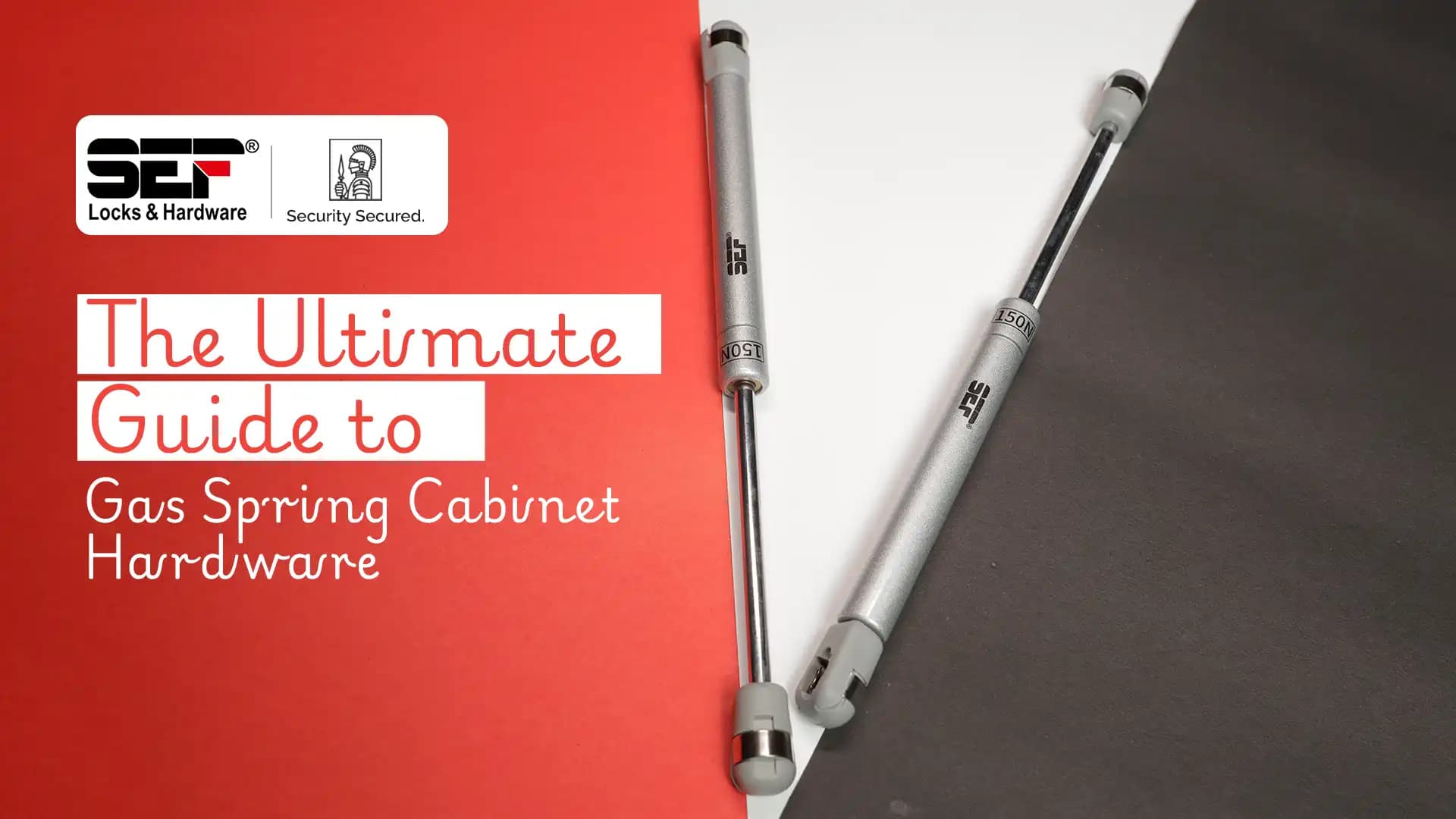
Tired of noisy, slamming cabinet doors? Do you struggle to keep an overhead cabinet open while you're reaching for something? The solution is simpler than you think: gas spring cabinet hardware. This small but mighty component can completely transform the functionality and feel of your cabinets, offering a blend of modern convenience, safety, and a touch of luxury.
This comprehensive guide is your one-stop resource for understanding, choosing, and installing gas spring hardware. We'll dive deep into the mechanics, benefits, and practical advice to help you upgrade your home.
1. What is Gas Spring Cabinet Hardware? An In-Depth Look
At its core, a gas spring, often called a gas strut or pneumatic lift, is a type of mechanical spring that uses compressed gas inside a cylinder to provide a force. Unlike a traditional coil spring that relies on a coiled metal, a gas spring is a sealed, self-contained system.
The Anatomy of a Gas Strut
A gas spring consists of three key components working in synergy:
- The Cylinder: A sealed tube filled with pressurized inert gas, typically nitrogen, and a small amount of oil.
- The Piston and Piston Rod: The piston moves within the cylinder, while the rod extends and retracts.
- End Fittings: The hardware on either end of the gas spring that connects it to the cabinet door and frame.
When you open a cabinet door, the pressurized gas inside the cylinder expands, providing a lift-assist force that makes the door feel weightless. As you close it, the piston compresses the gas, and the hydraulic oil provides a controlled, gentle damping effect. This is the soft-close mechanism that prevents doors from slamming, making your kitchen or living space remarkably quieter and safer.
2. The Unmatched Benefits of Gas Spring Hardware
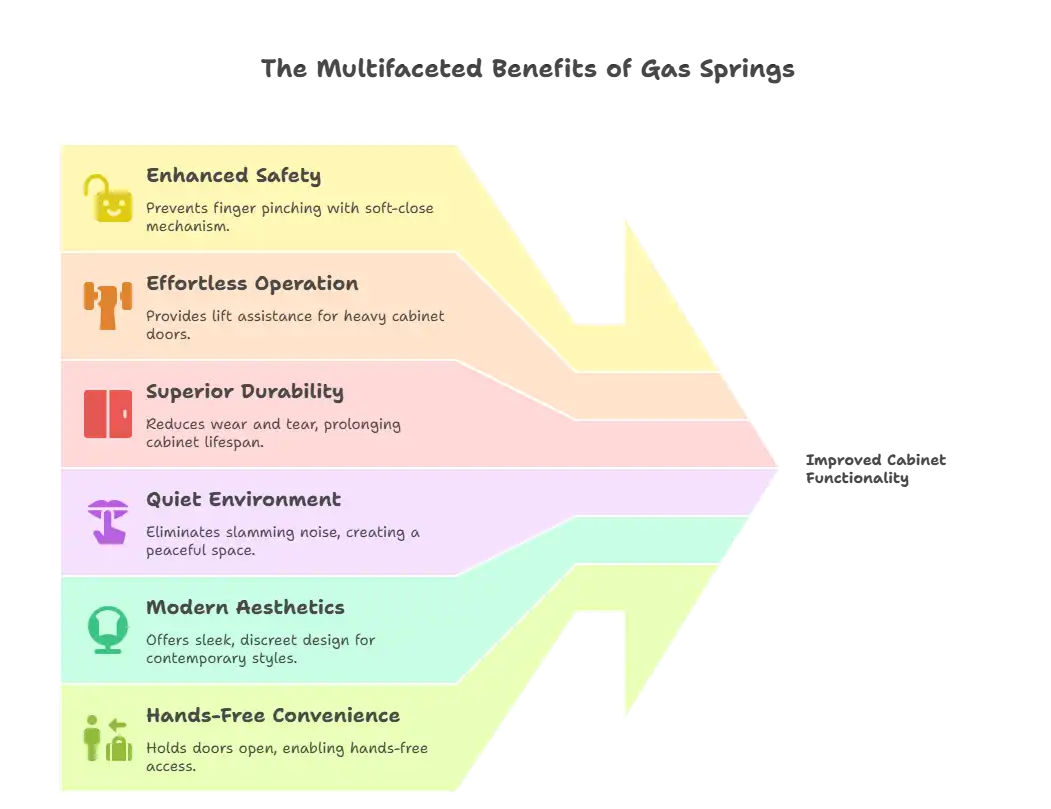
Upgrading to gas springs offers a multitude of advantages that go beyond just preventing noise.
- Enhanced Safety: A key benefit is the controlled movement. The soft-close function eliminates the risk of fingers getting pinched in a slamming door, a crucial safety feature for households with children or the elderly.
- Effortless Operation: Gas springs provide lift assistance for heavy doors, making them incredibly easy to open. This is particularly useful for large, top-opening cabinet doors where manual effort would be a strain.
- Superior Durability: By eliminating the impact of slamming, gas springs significantly reduce wear and tear on both the cabinet door and the hinges. This prolongs the lifespan of your cabinetry and preserves the quality of your investment.
- Quiet and Peaceful Environment: Say goodbye to the jarring sound of slamming doors. The gentle, controlled closing action creates a quieter and more peaceful living space, a subtle but significant improvement to your daily life.
- Modern Aesthetics: Gas springs are a sleek and discreet alternative to bulky traditional hardware. They are often hidden from view, contributing to a clean, minimalist design that complements contemporary kitchen and furniture styles.
- Hands-Free Convenience: Gas springs can hold doors open at various angles, allowing you to access the contents of your cabinet with both hands free. This is a game-changer for organization and meal preparation.
3. Types of Gas Spring Cabinet Hardware
While the core principle is the same, gas springs come in different types and force ratings to suit various needs.
- Upward-Opening Flap Stays: The most popular choice for kitchen wall cabinets where the door lifts up. They are available in different force ratings to handle various door weights.
- Down-Opening Lid Stays: Used for cabinets where the door opens downwards, such as toy boxes, benches, or home bars.
- Bi-fold and Parallel Lift Systems: These are more complex systems designed for larger, heavier doors that require a multi-hinge approach to open smoothly and hold in place. Brands like Blum's AVENTOS series are a prime example.
- Lockable Gas Springs: A less common but highly functional type that allows the piston to be locked at any position along its stroke, providing a secure hold.
4. How to Choose the Right Gas Spring: A Data-Driven Approach
Choosing the correct gas spring is crucial for optimal performance and safety. Here are the key factors to consider:
A. Door Weight and Force Rating
This is the single most important factor. The force of a gas spring is measured in Newtons (N). A gas spring's force rating must match the weight of your cabinet door. If the force is too high, the door will fly open too quickly; if it's too low, it won't be able to stay open or close softly.
Calculation Tip: While it's best to use a manufacturer's specific formula, a rough estimate for a top-opening door is to calculate the force needed by multiplying the door's weight in kg by 9.8 (to convert to Newtons) and then multiplying that by the distance from the hinge to the center of the door. As a simple rule of thumb, for a door weighing 5 kg, you would need a gas spring in the 50N to 80N range.
B. Stroke Length and Dimensions
The stroke length is the distance the piston rod can travel. It needs to be long enough to allow the door to open fully but not so long that it overextends and causes damage. Measure the height of your cabinet door to determine the appropriate stroke length. A general rule of thumb is that the gas spring's extended length should be about 50% to 2/3 of the door's height.
C. Mounting Position
The placement of the gas spring on the door and the cabinet frame significantly affects its performance. Incorrect positioning can lead to uneven movement or failure to support the door's weight. Always follow the manufacturer's provided template or diagram for the correct mounting points.
5. DIY Installation: A Step-by-Step Guide 🛠️
Installing gas spring hardware is a manageable DIY project. Here's a general guide, but always refer to the specific instructions provided by the manufacturer.
Tools You'll Need:
- Electric drill with drill bits
- Screwdriver set
- Measuring tape or ruler
- Pencil
- Manufacturer's template (if provided)
Installation Steps:
- Measure and Mark: Use the provided template or measure the designated points on the cabinet and the inside of the door where the brackets will be installed. Mark the screw holes with a pencil.
- Drill Pilot Holes: Carefully drill small pilot holes at each of the marked points to prevent the wood from splitting.
- Install Brackets: Securely screw the mounting brackets to the cabinet door and the cabinet frame. Ensure they are aligned correctly.
- Attach the Gas Spring: Snap or screw one end of the gas spring onto the bracket on the cabinet frame. Then, attach the other end to the bracket on the door.
- Test and Adjust: Gently open and close the cabinet door to test the lift-assist and soft-close functions. If the movement isn't smooth, double-check your measurements and the mounting alignment. Some models have an adjustment screw to fine-tune the tension.
6. Troubleshooting and Maintenance for Longevity
While gas springs are largely maintenance-free, a few issues can arise. Here’s how to address them and maximize their lifespan.
Common Problems & Solutions
- Door Slams Shut: This is the most common problem. The gas spring's force rating is too low for the weight of your door. You need to replace it with a higher Newton-rated model.
- Door Flies Open: The gas spring's force rating is too high. This can be dangerous and will strain your cabinet hinges. Replace it with a lower Newton-rated model.
- Jerky or Noisy Movement: This can indicate that the gas spring is losing pressure or that the mounting points are misaligned. Check the installation first. If the problem persists, the spring may be at the end of its life and needs to be replaced.
- Leaking Oil: If you see any oily residue on the piston rod, the internal seals have failed. The gas spring is not reparable and must be replaced.
Maintenance & Care
Gas springs are designed to be sealed units. Do not apply oil or grease to the piston rod, as this will attract dirt and dust, which can damage the seals over time. The only maintenance needed is:
- Regular Inspections: Periodically check for any visible signs of leaks, rust, or damage.
- Keep Clean: Wipe the outside of the spring and the surrounding area to prevent dirt from accumulating and potentially damaging the seals.
- Avoid Overloading: Never place excessive weight on the door, as this will strain the gas spring and lead to premature failure.
7. Cost vs. Value: A Smart Investment
While gas spring hardware has a higher upfront cost than basic hinges, a cost-benefit analysis reveals its superior long-term value.
- Initial Cost: A single gas spring for a cabinet can range from $10 to $50 or more, depending on the brand and force rating. Full-scale lift systems (like Blum AVENTOS) can cost significantly more.
- Long-Term Value: A high-quality gas spring has a lifespan of 40,000 to 100,000 cycles or even more. By preventing the wear and tear associated with slamming, they protect your cabinetry, saving you money on potential repairs or replacements. The enhanced safety, quietness, and luxury feel are often considered priceless benefits that justify the initial investment.
8. Advanced Applications: Beyond the Kitchen
The versatility of gas springs extends far beyond kitchen cabinets. Their ability to provide controlled, soft-close movement makes them ideal for a wide range of furniture and home applications:
- Toy Boxes and Benches: Prevents heavy lids from slamming shut on children's fingers.
- Coffee Tables: Enables smooth, lift-top functionality for hidden storage.
- Wall Beds (Murphy Beds): Provides the necessary lift and damping for safely raising and lowering a bed.
- Home Office Furniture: Used in ergonomic, height-adjustable desks and computer monitor arms.
- Home Gyms: Assists in the smooth and safe movement of equipment parts.
Final Thoughts
Gas spring cabinet hardware is more than just a functional component; it's a home improvement that elevates your living space. By providing a silent, safe, and effortless way to interact with your cabinets, these small devices deliver a significant upgrade in both convenience and style. Whether you're renovating your kitchen or simply want to improve your existing cabinets, gas springs are an essential piece of modern hardware that you won't regret installing.
Contact Us
Have questions about which gas spring is right for your project? Need expert advice on installation or troubleshooting? Our team of hardware specialists is here to help you
FAQs about Gas Spring Cabinet Hardware
1. What is the main benefit of using gas springs on my cabinets?
Gas springs provide soft-close and lift-assist functionality. This prevents doors from slamming, ensures quiet operation, and makes it effortless to open and hold up heavy or overhead doors. They significantly improve safety and durability.
2. How do I choose the correct gas spring for my cabinet door?
You must match the gas spring's force (in Newtons) to the weight and size of your door. If the force is too high, the door will fly open; if it's too low, it won't stay open. Always consult the manufacturer's product specifications and use their weight-force charts or calculators.
3. Can I install gas springs myself?
Yes, gas spring installation is a common DIY project. Most products come with clear instructions and a template. You'll need a drill, a screwdriver, and a measuring tape. The key is to measure and align the mounting brackets accurately.
4. Why is my cabinet door still slamming after I installed a gas spring?
This almost always means the gas spring's force is too low for the weight of your door. You need to replace it with a gas spring that has a higher Newton rating to properly support and slow down the door's movement.
5. Do I need to lubricate or maintain a gas spring?
No, gas springs are sealed, maintenance-free units. Do not apply any oil, grease, or lubricants to the piston rod, as this will attract dirt and cause the seals to fail. The only maintenance needed is to keep the area clean and visually inspect for damage or leaks.
6. Are gas springs a replacement for traditional hinges?
No, gas springs are typically used in addition to hinges. The hinges provide the pivot point for the door, while the gas springs provide the lift and soft-close motion.
7. How long do gas springs last?
The lifespan of a high-quality gas spring can range from 40,000 to over 100,000 cycles. They are highly durable and, when chosen and installed correctly, can outlast the cabinetry itself.